Updated: Feb 02, 2026 By: Marios

Twenty years ago, a company’s email traffic originated almost exclusively from its own on-premise Exchange servers. Today, a single mid-sized enterprise might rely on a fragmented constellation of third-party SaaS platforms to communicate with the world.
Salesforce handles CRM updates; Zendesk or Intercom manages customer support tickets; Mailchimp or HubSpot drives marketing campaigns; and Google Workspace or Microsoft 365 powers day-to-day internal communication. While this distributed approach maximizes operational efficiency, it creates a significant, often invisible bottleneck in the company’s Domain Name System (DNS) infrastructure.
This phenomenon is known as “SPF Bloat,” and for IT directors and Chief Technology Officers, it represents a critical vulnerability. As organizations add more tools to their stack, they unwittingly march toward a hard technical limit encoded into the backbone of the internet, a limit that, once crossed, causes legitimate emails to vanish into the void of the spam folder.
Understanding RFC 7208
To understand the trap, one must look at the foundational rules of email authentication. The Sender Policy Framework (SPF) is the first line of defense against domain spoofing. It is a DNS text record that lists the IP addresses and domains authorized to send email on behalf of your organization.
However, the internet’s governing standards body, the Internet Engineering Task Force (IETF), placed a specific constraint on this system to prevent abuse. According to IETF RFC 7208, which standardizes SPF, a receiver’s validation software must limit the number of DNS lookups to exactly ten per SPF check.
This “10-lookup limit” is the ceiling that many growing companies hit without realizing it. Every time an administrator adds a mechanism like include:spf.google.com or include:servers.mcsv.net (for Mailchimp) to their record, they are asking the receiving server to perform a DNS query.
The trap lies in the nesting. A service like Salesforce might require an include statement that, in turn, references other domains behind the scenes. A single entry in your record can trigger multiple lookups. When the total count exceeds ten, the receiving server (whether it be Gmail, Yahoo, or Outlook) stops processing.
The result is a “PermError,” or permanent error. A PermError invalidates the entire SPF record. Without the validation provided by an SPF generator tool, it suddenly doesn’t matter if the email is legitimate. The authentication fails and all emails are treated as spoofed.
The Rise of “Shadow IT” and DNS Erosion
The complexity is compounded by organizational behavior. In many companies, the marketing or HR departments often bypass the IT department to sign up for new tools, a practice known as “Shadow IT.”
A marketing manager might sign up for a new webinar platform that sends automated reminders. In order to deliver these reminders to inboxes, the platform instructs the manager to “add this to your SPF record.” The manager then forwards the request to a web developer, who must safeguard the domain by running the record through Warmy.io’s SPF tool to verify the lookup count before and after implementation.
According to data from cybersecurity firms, a significant percentage of legitimate corporate domains operate with broken SPF records due to this additive approach. They simply keep pasting new authorizations until the record breaks.
Streamlining Authorization with an SPF Generator
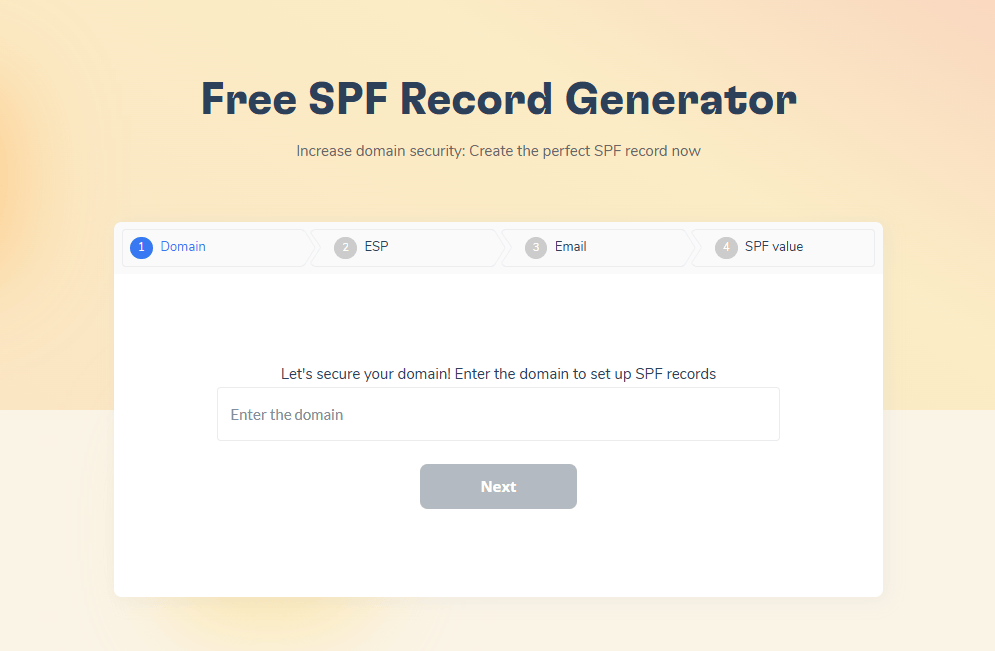
Solving this issue requires a shift from manual entry to automated management. Manually editing a DNS TXT record is prone to syntax errors. A missing space, an extra character, or a misplaced modifier can render the record useless.
This is where the strategic use of a specialized SPF Generator becomes essential for network administrators. Rather than writing raw text strings, these tools allow administrators to input their authorized services and generate a syntactically perfect record.
A high-quality SPF record generator performs two critical functions in this context:
- Syntax Validation: It ensures that the record follows the strict formatting rules of RFC 7208, preventing common typos that cause immediate failures.
- Lookup Optimization: Advanced generators can help visualize the structure of the record. Before deploying updates to the live DNS, administrators can see exactly how many lookups their new configuration will trigger.
By using an SPF generator as a staging environment, IT teams can model their infrastructure. They can determine if adding that new HR tool will push them over the 10-lookup limit before it causes damage.
If the limit is reached, the organization knows it must move to advanced solutions, such as “SPF flattening” (converting domain names into static IP addresses), but the generation tool remains the first step in maintaining a clean, valid authorization list.
DNS as a Dynamic Asset
As companies adopt more SaaS solutions to power their growth, their email infrastructure becomes more complex and fragile.
The “Too Many Senders” trap is easy to fall into but entirely avoidable with diligent auditing. By understanding the technical constraints of the IETF standards and utilizing tools like an SPF generator to ensure precision and validity, business leaders can ensure that their technology stack supports their communication goals rather than sabotaging them.


