Updated: Aug 17, 2026 By: Marios
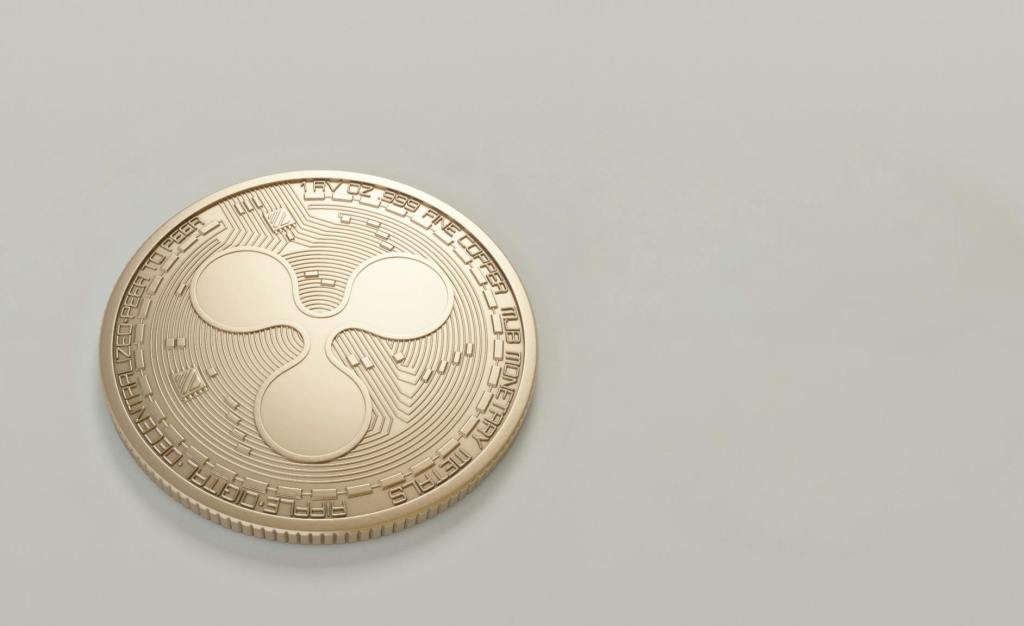
Choosing the right blockchain really isn’t just a technical decision; it shapes how your application performs, scales and survives real-world demand. You’re constantly balancing speed, transaction costs and decentralization and there’s no one-size-fits-all answer. What matters is how those trade-offs line up with what your dApp actually needs to do.
It’s easy to get caught up in features when designing a decentralized application, but those details mean very little if the underlying network can’t keep up. At a certain point, your focus shifts from writing clean code to picking infrastructure that won’t bottleneck your growth.
Across the industry, developers are paying closer attention to congestion, fees and processing speeds, because those factors directly affect user experience. Recent xrp news reflects that shift, with growing attention on cross-border payments and tokenized assets pushing developers to think more seriously about long-term network stability.
Your infrastructure choice ultimately sets the boundaries for both performance and cost.
Understanding Core Architectural Divergences
Before you commit to a network, it helps to ask a simple question: how much control do you want over validation? That answer influences everything from security to performance.
Ethereum really uses a Proof-of-Stake system backed by an extensive, worldwide network of validators. In contrast, Solana employs a unique mix of Proof-of-History and Proof-of-Stake to maximize transaction speeds.
The XRP Ledger really moves in an entirely different direction. It uses a Federated Consensus model based on a Unique Node List, which changes how agreement is reached across the network. These differences aren’t just technical; they shape how your application behaves in practice.
Ethereum leans heavily into decentralization and censorship resistance, but that can come at the cost of higher fees when demand spikes. Solana prioritizes speed and near-instant finality, though it requires powerful hardware to keep the network running smoothly.
The XRP Ledger strips away mining and staking altogether, really offering a more predictable environment with lower overhead.
Analyzing Throughput and Fee Structures
When an application requires many interactions, charges can become a deal-breaker. When the charges are high, they can deter users from using the application, no matter how good it is otherwise.
Solana addresses this by handling thousands of transactions per second, keeping costs extremely low. That makes it well-suited to high-frequency platforms, whether you’re building consumer apps or active DeFi systems.
Ethereum is a slow blockchain system at its lowest level, able to process about fifteen to thirty transactions per second. In case of high traffic, the fees may increase significantly; hence, most projects prefer Layer-2 services.
The XRP Ledger sits somewhere in between, supporting up to 1,500 transactions per second with settlement times of 3 to 5 seconds. For many developers, that balance of speed and predictability is really a practical middle ground.
- Ethereum Base Fees: Highly volatile pricing during periods of really intense transaction demand.
- Solana Network Fees: Consistently stable at less than one cent per transaction execution.
- XRP Ledger Cost: Fixed fractional micro-fees that eliminate budget surprises for creators.
Navigating the Decentralization Spectrum
A choice between scalability and decentralization is a requirement that all blockchains impose on their users. At the extreme end lies Ethereum, which uses thousands of nodes as validators of transactions to achieve a high level of decentralization. Such decentralization ensures the network is quite secure.
Solana, by comparison, operates with a smaller validator set, around 1,900 nodes, because running one requires more advanced hardware. The XRP Ledger takes a different route again, allowing you to choose which validators to trust through its Unique Node List system.
That model has its critics, who argue it introduces centralization risks. At the same time, supporters point out that it very much helps maintain network stability and reduces the likelihood of disruptive splits.
Evaluating Market Dynamics and Ecosystem Data
Market conditions also play a role in infrastructure decisions. Where liquidity flows, development tends to follow. Binance’s data indicates that trading remained robust on major networks throughout 2025, highlighting the need for a platform that can manage ongoing demand.
At the same time, volatility really remains a constant factor. One update from Binance highlighted a week where the total crypto market cap dropped by more than US$300 billion, falling to around US$3.7 trillion. Movements like that put pressure on both assets and the networks supporting them.
In that time frame, the price of Ethereum declined by more than 13% and Solana by more than 20%. As a developer, the message is clear that the infrastructure must be able to withstand pressure when conditions get tough.
Selecting the Right Ledger Environment
In the end, the right choice comes down to alignment. Your application’s goals need to align with the strengths of the network you build. If you’re working on high-frequency gaming or consumer-focused platforms, Solana’s speed and low fees may give you the flexibility you need, even if it comes with added complexity.
Projects that really value security, liquidity, and integration within a deep ecosystem will find that Ethereum remains a favorable choice, even though it can be costly and relies heavily on scalability solutions. But if you are interested in tokenizing physical assets, payments, or fast settlement, then the XRP Ledger is built with these considerations in mind.


